Strength Training and Longevity: How Lifting Supports a Longer, Stronger Life
Last reviewed: May 2026
Updated May 2026: This article was substantially rebuilt with stronger evidence, clearer structure, safer practical guidance, and a more precise focus on strength training, longevity, and healthy aging. The original publish date is preserved in the article record.
This content is for informational purposes only and is not a substitute for professional medical advice, diagnosis, or treatment. Always consult a qualified healthcare provider before making changes to your diet, supplement routine, or exercise program.
Our articles follow the Fitsnip research process and editorial policy.
Quick Summary
Research links strength training with healthier aging through muscle preservation, metabolic resilience, mobility, and lower mortality-risk patterns. A practical plan trains major movement patterns two or more days per week, paired with regular aerobic activity and recovery. The goal is more physical capacity for the decades ahead.
Jump to Sections
- How strength training supports longevity
- Muscle preservation is the first rung
- Metabolic resilience and mortality risk
- Physical reserve as you age
- How much strength training is enough?
- How to train for longevity without overdoing it
- FAQ
How strength training supports longevity
Strength training supports longevity by preserving muscle, improving physical function, and helping the body stay metabolically resilient with age. Studies consistently associate resistance training with lower mortality risk, with the strongest patterns appearing when people also meet aerobic activity guidelines. Individual results still depend on genetics, medical history, training quality, nutrition, sleep, and total activity.
Longevity also covers the ability to stand from a chair, climb stairs, carry groceries, recover from a stumble, and keep participating in ordinary life without every physical task feeling close to your limit.
Strength training earns its place because it gives the body a signal that daily life often stops providing. Sedentary routines ask very little from muscle. The body eventually adapts to that lack of demand. Resistance training changes the signal by asking muscle, tendon, bone, and connective tissue to keep producing force.
Walking and aerobic exercise help. Sleep, nutrition, blood pressure, body composition, and medical care all carry weight too. Strength training adds a different kind of protection. It tells the body to keep muscle and protect the physical reserve that often disappears in a sedentary life.
The CDC recommends muscle-strengthening activity on at least two days per week, along with regular aerobic movement. For older adults, CDC guidance also includes balance work as part of a well-rounded plan.
For the non-gym side of aging well, Fitsnip’s guide to daily movement and longevity explains how ordinary activity, walking, stairs, and low-friction movement support long-term health. Fitsnip’s guide to exercise benefits beyond weight loss also covers why exercise changes far more than the scale.
The Longevity Strength Ladder breaks this into five rungs you can train for directly:
- Muscle preservation: Keep the tissue that helps you move, lift, and recover.
- Metabolic resilience: Support glucose control, body composition, and energy use.
- Mortality-risk association: Understand the research pattern with appropriate caution.
- Physical reserve: Build capacity for stairs, carries, balance, posture, and daily independence.
- Sustainable training rhythm: Train in a way you can repeat for years.
Muscle preservation is the first rung
Muscle loss is one of the quiet leaks of aging. It shows up slowly: stairs feel harder, bags feel heavier, posture fades sooner, recovery takes longer, and getting up from the floor becomes something to avoid.
Strength training gives muscles a reason to stay.
A National Strength and Conditioning Association position statement on resistance training for older adults supports resistance training as a major tool for improving strength, function, mobility, independence, and quality of life in older populations. Most adults can train for strength without training like athletes. The aging body still responds to progressive resistance.
Strength shows up in daily life. It affects whether someone can:
- Stand from a low chair without using both hands
- Carry a week’s groceries in one trip
- Climb stairs with confidence instead of hesitation
- Lift luggage into a car or overhead compartment
- Push open a heavy door
- Walk on uneven ground without feeling fragile
- Get down to the floor and back up with control
Those are independence outcomes. They help determine whether someone can stay active, travel, manage a home, recover from setbacks, and rely less on outside help.
Sarcopenia often enters this conversation. It refers to low muscle strength and mass that can affect health and function in older adults. A review in Age and Ageing describes resistance exercise as a key intervention used in sarcopenia care, with exercise dose and delivery shaping the result.
For general healthy aging, begin training strength before weakness becomes the reason you have to.
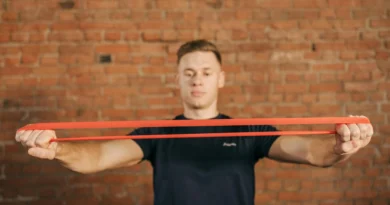
That strength signal can come from machines, dumbbells, barbells, kettlebells, resistance bands, bodyweight exercises, or a mix of tools. The method should fit your current ability, joints, equipment, and recovery.
If you train at home, Fitsnip’s guide to the best resistance bands can help you understand where bands fit, where they fall short, and when weights or machines may be more useful.
Muscle is the physical engine that keeps options open as you age.
Metabolic resilience and mortality risk
Strength training also supports longevity through metabolic resilience. Muscle helps the body store and use glucose, handle daily energy demands, and maintain better body composition over time. Stronger adults still need good nutrition, aerobic activity, sleep, and medical care, but muscle gives the body a larger reserve to work with.
Aging often brings overlapping problems: reduced movement, muscle loss, weaker glucose control, fat gain, and less confidence in physical activity. Strength training pushes against several of those problems at once.
Read the mortality research as a pattern across studies. Individual results are shaped by the full lifestyle picture.
A 2022 BJSM meta-analysis found that muscle-strengthening activities were associated with lower risk across several major outcomes. The reported reductions ranged from 10 to 17 percent for all-cause mortality, cardiovascular disease, total cancer, diabetes, and lung cancer. Those numbers come from cohort studies, so they reflect patterns across large groups of people.
Another 2022 meta-analysis focused specifically on resistance training and mortality risk found that resistance training was associated with reduced all-cause, cardiovascular disease, and cancer-specific mortality. Across these studies, the pattern is consistent: adults who do some resistance training tend to show better long-term risk patterns than adults who do none.
A 2019 systematic review and meta-analysis in the European Journal of Preventive Cardiology found that resistance training was associated with lower all-cause mortality, with stronger associations when resistance training was combined with aerobic exercise.
The longevity signal looks strongest when strength and aerobic work are combined. Strength training builds muscle and physical capacity, while aerobic activity supports cardiovascular fitness and stamina. The combination covers more of the aging body.
A large JAMA Network Open study in adults 65 and older found that people who met both muscle-strengthening and aerobic activity guidelines had lower all-cause mortality risk than those meeting neither. The study was observational, but it strengthens the practical case for pairing strength and aerobic work.
Train your muscles, keep moving, and avoid choosing one form of exercise as the only one that counts.
Physical reserve as you age
Physical reserve is the capacity to handle life without every task feeling close to your limit.
It shows up when you carry a heavy bag without tweaking your back, or when a stairwell feels manageable instead of intimidating. It carries you through getting off the floor, helping someone move furniture, hiking on uneven ground, and recovering from a demanding week without feeling physically fragile.
The well-known PURE study on grip strength found that lower grip strength was associated with a higher risk of all-cause and cardiovascular mortality across a large international cohort. Grip strength is best understood as a marker of physical capacity across populations. It gives researchers a simple window into the broader condition of the body.
Strength rarely exists in isolation. A stronger grip often travels with better muscle function, greater confidence in movement, more physical activity, and a stronger ability to handle daily tasks. It is one clue inside a larger picture.
Strength training helps build that larger picture through major movement patterns:
- Squatting and stepping support stairs, chairs, and lower-body power.
- Hinging supports lifting from the floor and hip strength.
- Pushing supports getting up, bracing, and upper-body control.
- Pulling supports posture, back strength, and shoulder function.
- Carries support grip, trunk control, and real-world strength.
- Balance and controlled movement help reduce avoidable falls and hesitation.
This connects directly to bone health, but that topic deserves its own lane. For a deeper guide on loading, bone density, balance, and fracture-risk guardrails, read Fitsnip’s article on strength training for bone health.
Physical reserve comes from repeated signals that tell the body to keep capacity available. You use strength, then you keep more of it.
How much strength training is enough?
Most adults can start with two full-body strength sessions per week.
For longevity, the plan should survive your schedule. Simple, repeatable sessions build real momentum over months and years.
The CDC and the Physical Activity Guidelines for Americans both recommend muscle-strengthening activity covering all major muscle groups on two or more days per week. The full federal guideline is available through Health.gov.
A two-session baseline might look like this:
Session A
- Squat or leg press
- Row or pulldown
- Push-up, machine press, or dumbbell press
- Hip hinge or deadlift variation
- Carry or trunk-control exercise
Session B
- Step-up, split squat, or lunge variation
- Glute bridge, Romanian deadlift, or cable pull-through
- Chest-supported row or band row
- Overhead press or incline press
- Balance drill, carry, or controlled core work
Use this as a pattern. Adjust exercise selection to your experience, joints, equipment, and medical history.
Beginners can start with chair squats, wall push-ups, band rows, and light carries. Trained adults move into barbells, dumbbells, machines, and heavier loads. Older adults with health limitations should get professional guidance to adapt the plan safely.
Ask whether the program gives your body a reason to stay strong without stealing your ability to recover. That determines whether the work is doing its job.
Coaching check: A longevity-focused session should leave you ready to come back next week. If the workout ruins your next three days, the cost is too high for the return.
How to train for longevity without overdoing it
Strength training for longevity should build capacity within what your body can absorb.
Hard training has a place after the basics are stable. Extra stress becomes counterproductive when joints, sleep, motivation, or recovery start breaking down. The best plan gives you enough resistance to adapt and enough recovery to return consistently.
Train major patterns
Most adults benefit from some version of:
- Squat
- Hinge
- Push
- Pull
- Carry
- Step or lunge
- Balance or trunk control
Across a week, each pattern should appear often enough to build skill and strength.
Progress slowly enough to keep form
Progress can mean more weight, more reps, more sets, better range of motion, slower control, better balance, or cleaner technique. Weight is only one tool.
For longevity, sloppy progress is a poor trade. If a heavier load makes your joints hurt, your back round aggressively, or your recovery collapse, the weight is working against the goal.
Keep aerobic movement in the plan
Resistance training and aerobic work appear strongest together in much of the longevity literature. Walk, cycle, swim, or pick another aerobic activity you can repeat.
Consistency, adequate intensity, and the ability to keep going do most of the work, regardless of mode.
Respect pain and medical context
People with chest pain, unexplained shortness of breath, dizziness, fainting, neurological symptoms, recent surgery, uncontrolled blood pressure, major joint pain, or diagnosed medical limitations should get qualified guidance before pushing intensity.
Strength training is adaptable. The safest version depends on the person.
Treat recovery as part of the work
Sleep, protein, total food intake, hydration, stress management, and rest days all influence whether training builds you up or wears you down.
For readers over 40 who struggle to get enough protein around training, Fitsnip’s guide to protein powder after 40 explains when a supplement is useful and when whole food is enough.
FAQ
Is strength training linked to a longer life?
Yes. Observational research links resistance training with lower mortality risk, especially alongside aerobic activity. Individual results depend on health history, training consistency, nutrition, sleep, and overall lifestyle.
How much strength training is needed for longevity?
A strong baseline is two full-body sessions per week. Some adults do well with three. The best amount is enough to train major muscle groups consistently while still recovering well.
Is strength training better than aerobic exercise for longevity?
The strongest longevity pattern usually includes both, since strength training builds muscle and function while aerobic activity supports heart health and endurance.
What exercises are best for strength and longevity?
Useful exercises include squats, hinges, rows, presses, step-ups, carries, and balance work. The best choices depend on strength, mobility, equipment, injury history, and current health status.
Can you start strength training after 50 or 60?
Yes. Many adults can start strength training later in life with the right entry point. Begin with controlled movements, manageable loads, and gradual progression. Get guidance if you have medical or orthopedic concerns.
Does resistance training reduce mortality risk?
Research links resistance training with lower all-cause mortality risk, especially when paired with aerobic activity. The evidence is strongest as a population-level association.
Can too much strength training hurt longevity?
Training can backfire when it overwhelms recovery, worsens pain, or crowds out sleep and aerobic movement. Longevity training should build capacity over time.
Sources
Centers for Disease Control and Prevention. “Adult Activity: An Overview.” CDC.
https://www.cdc.gov/physical-activity-basics/guidelines/adults.html
Centers for Disease Control and Prevention. “Older Adult Activity: An Overview.” CDC.
https://www.cdc.gov/physical-activity-basics/guidelines/older-adults.html
U.S. Department of Health and Human Services. “Physical Activity Guidelines for Americans, 2nd edition.” Health.gov.
https://health.gov/sites/default/files/2019-09/Physical_Activity_Guidelines_2nd_edition.pdf
Momma H, Kawakami R, Honda T, Sawada SS. “Muscle-strengthening activities are associated with lower risk and mortality in major non-communicable diseases: a systematic review and meta-analysis of cohort studies.” British Journal of Sports Medicine. 2022.
https://pubmed.ncbi.nlm.nih.gov/35228201/
Shailendra P, Baldock KL, Li LSK, Bennie JA, Boyle T. “Resistance Training and Mortality Risk: A Systematic Review and Meta-Analysis.” American Journal of Preventive Medicine. 2022.
https://pubmed.ncbi.nlm.nih.gov/35599175/
Saeidifard F, Medina-Inojosa JR, West CP, et al. “The association of resistance training with mortality: A systematic review and meta-analysis.” European Journal of Preventive Cardiology. 2019.
https://academic.oup.com/eurjpc/article-abstract/26/15/1647/5925845
Webber BJ, Piercy KL, Hyde ET, Whitfield GP. “Association of Muscle-Strengthening and Aerobic Physical Activity With Mortality in US Adults Aged 65 Years or Older.” JAMA Network Open. 2022.
https://jamanetwork.com/journals/jamanetworkopen/fullarticle/2797402
Fragala MS, Cadore EL, Dorgo S, et al. “Resistance Training for Older Adults: Position Statement From the National Strength and Conditioning Association.” Journal of Strength and Conditioning Research. 2019.
https://pubmed.ncbi.nlm.nih.gov/31343601/
Hurst C, Robinson SM, Witham MD, et al. “Resistance exercise as a treatment for sarcopenia: prescription and delivery.” Age and Ageing. 2022.
https://academic.oup.com/ageing/article/51/2/afac003/6527381
Leong DP, Teo KK, Rangarajan S, et al. “Prognostic value of grip strength: findings from the Prospective Urban Rural Epidemiology (PURE) study.” The Lancet. 2015.
https://pubmed.ncbi.nlm.nih.gov/25982160/
Harvard Health Publishing. “Strength training might lengthen life.” Harvard Health. 2023.
https://www.health.harvard.edu/healthy-aging-and-longevity/strength-training-might-lengthen-life

J.D. Wilson, PN1, is the founder of Fitsnip.com, a Precision Nutrition Level 1 Coach, certified meditation teacher, and author of The Comfort Trap: The Quiet Cost of an Unchallenged Life. His work focuses on practical, evidence-based nutrition, strength training, behavior change, sleep, stress, recovery, and everyday health decisions for adults who want clear guidance without hype. About J.D. Wilson