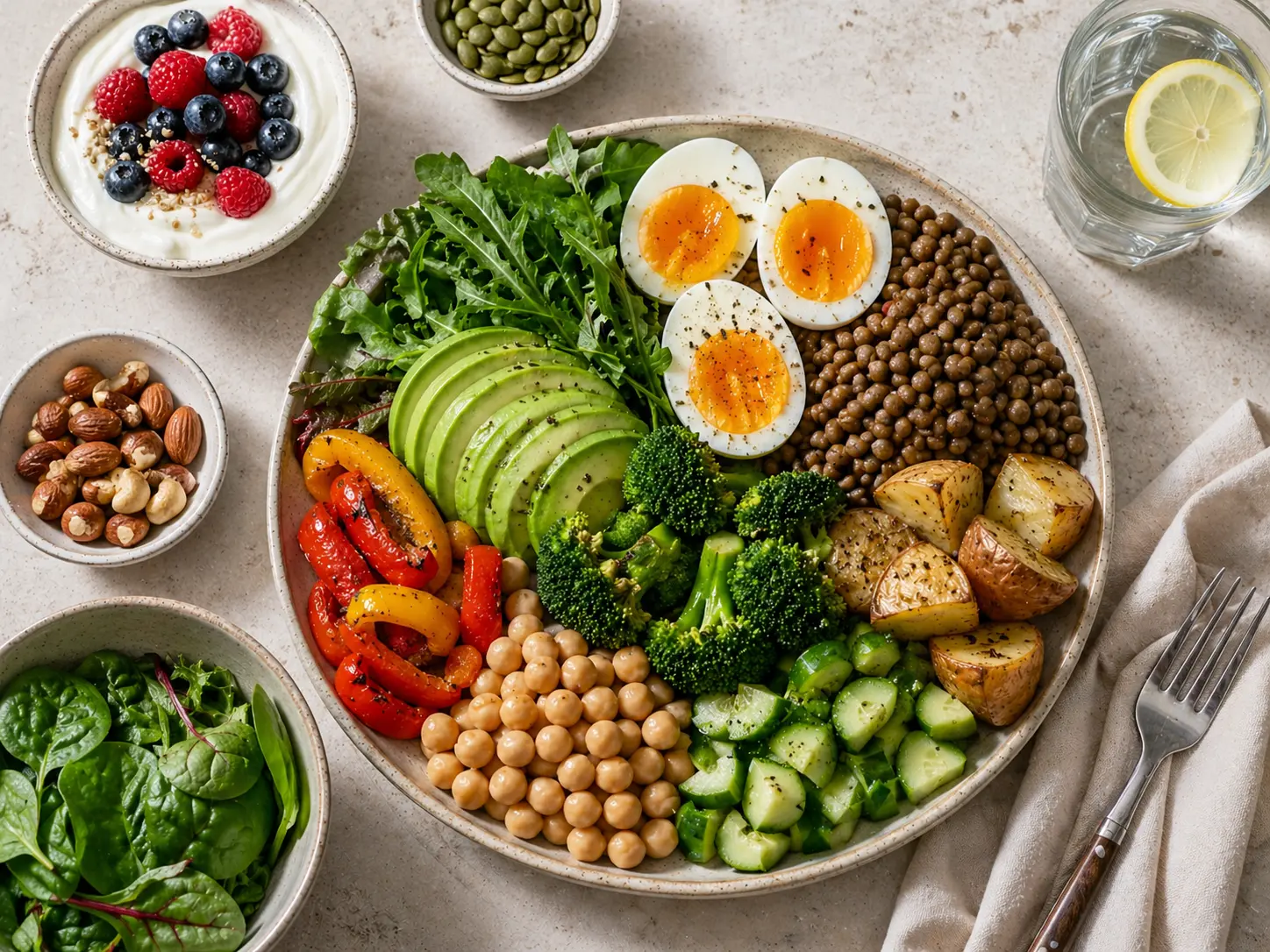
Superfoods for Weight Loss: What Actually Helps, What’s Hype, and How to Build a Better Plate
By J.D. Wilson, PN1
Updated and reviewed: April 30, 2026
This content is for informational purposes only and is not a substitute for professional medical advice, diagnosis, or treatment. Always consult a qualified healthcare provider before making changes to your diet, supplement routine, or exercise program.
Quick Summary
Superfoods can support weight loss, but the label itself does not make a food special.
The most useful foods for weight loss usually help through protein, fiber, water content, food volume, nutrient density, and consistency.
Greek yogurt, eggs, beans, lentils, berries, oats, leafy greens, potatoes, fish, chia seeds, flaxseed, and whole fruit can all help when they make meals more filling.
Calorie-dense foods like nuts, nut butter, avocado, olive oil, granola, smoothies, and acai bowls can slow progress if portions drift.
The better target is a repeatable plate built around fullness, nutrition, and calorie control.
Jump to Sections
- What Makes a Food Useful for Weight Loss?
- The Fitsnip Weight-Loss Food Filter
- Best Superfoods for Weight Loss
- Superfoods That Can Slow Your Progress
- How to Build a Better Weight-Loss Plate
- FAQ
Why Most Superfood Lists Do Not Actually Help
Most superfood weight-loss articles give you a list.
Kale. Berries. Chia seeds. Salmon. Green tea. Avocado. Maybe acai, quinoa, turmeric, and dark chocolate if the article is trying to sound more exciting.
That kind of list becomes useful only when you understand what the foods are doing for you.
A food helps with weight loss when it makes the next right eating decision easier. That usually happens through a few practical mechanisms:
- It helps you feel full.
- It gives you enough protein.
- It gives you enough fiber.
- It lets you eat a satisfying portion for fewer calories.
- It improves the overall quality of your diet.
- It is simple enough to repeat.
That last point matters more than most people realize. A perfect food you eat twice and forget about will not change much. An ordinary food that helps you build a better breakfast every morning can matter a lot.
The common assumption is that superfoods have special weight-loss power. A better frame is simpler: some foods make calorie control easier because they are more filling, more nutrient-dense, or harder to overeat.
That is the standard this article uses.
What Makes a Food Useful for Weight Loss?
A food is useful for weight loss when it helps you manage total intake without feeling deprived all day. The strongest choices keep meals filling, nourishing, and repeatable enough to support a calorie deficit over time.
Here are the main filters.
Protein helps with fullness and muscle retention
Protein is one of the most useful nutrients during weight loss because it supports satiety and helps preserve lean mass when calories are lower. A review in the American Journal of Clinical Nutrition discusses protein’s role in satiety and weight management, especially when protein is spread through the day rather than left to one large dinner (Paddon-Jones et al., 2008).
This is one reason foods like Greek yogurt, eggs, fish, cottage cheese, lean meat, tofu, tempeh, beans, and lentils belong in the conversation.
You do not need to turn every meal into a bodybuilding meal. A better aim is to stop building meals that are mostly carbohydrates and fat with protein added as an afterthought.
Fiber slows the meal down
Fiber helps food feel more substantial. It adds bulk, slows digestion, supports gut health, and can help reduce hunger between meals. A review on dietary fibers and appetite regulation describes how fiber can reduce hunger and prolong satiety through mechanical and hormonal signals in the digestive tract (Akhlaghi, 2024).
This is where beans, lentils, oats, berries, vegetables, chia seeds, flaxseed, whole grains, apples, pears, and potatoes earn their place.
Most people do not need a complicated fiber protocol. They need more ordinary high-fiber foods showing up in actual meals.
Food volume helps you feel like you ate enough
Mayo Clinic explains energy density as the number of calories in a given amount of food. Lower-energy-density foods allow you to eat a larger portion for fewer calories, which can help with hunger control during weight loss (Mayo Clinic). A year-long clinical trial also found that reducing dietary energy density, especially by increasing fruits and vegetables, helped support weight loss while allowing people to eat a greater weight of food (Ello-Martin et al., 2007).
That is why vegetables, fruits, broth-based soups, beans, potatoes, Greek yogurt, and lean proteins often work better than tiny portions of calorie-dense foods.
A tablespoon of olive oil may be healthy. A giant salad with vegetables, beans, chicken, and a measured dressing will probably keep you full longer.
Both can belong. They do different jobs.
Nutrient density protects diet quality
When calories go down, food quality matters more. You have less room for empty calories, random snacks, and meals that leave you hungry two hours later.
Nutrient-dense foods provide vitamins, minerals, protein, fiber, healthy fats, or beneficial plant compounds without requiring a large calorie load.
That is the real value of many so-called superfoods. They are efficient foods, not magic foods.
Repeatability turns good food into a system
Weight loss usually fails when the plan is too fragile.
If a person needs a rare berry powder, a $14 smoothie, and a perfect Sunday meal prep routine to stay on track, the plan will break as soon as life gets busy.
The best foods are boring enough to repeat and useful enough to matter.
Coaching check: A food earns its place when it helps you make the next meal easier, not when it only looks impressive in a grocery cart.
Are Superfoods Actually Backed by Science?
Some foods called superfoods are genuinely nutritious. The label itself is the problem.
Harvard T.H. Chan School of Public Health notes that there is no scientifically based or regulated definition for “superfood.” In practice, the term is often used for foods that are nutrient-rich, linked to disease prevention, or marketed as having several health benefits at once (Harvard T.H. Chan School of Public Health).
That distinction matters.
Blueberries, salmon, oats, beans, leafy greens, and yogurt can all be excellent foods. Calling them superfoods can make people think they have special power outside the rest of the diet.
Their benefits still depend on the total diet.
A blueberry cannot repair a diet built around low protein, low fiber, high calories, and poor sleep. Chia seeds cannot cancel a nightly dessert habit. Avocado cannot make a calorie surplus disappear.
Ask a sharper question: What job does this food do on my plate?
The Fitsnip Weight-Loss Food Filter: How to Tell If a Food Actually Helps
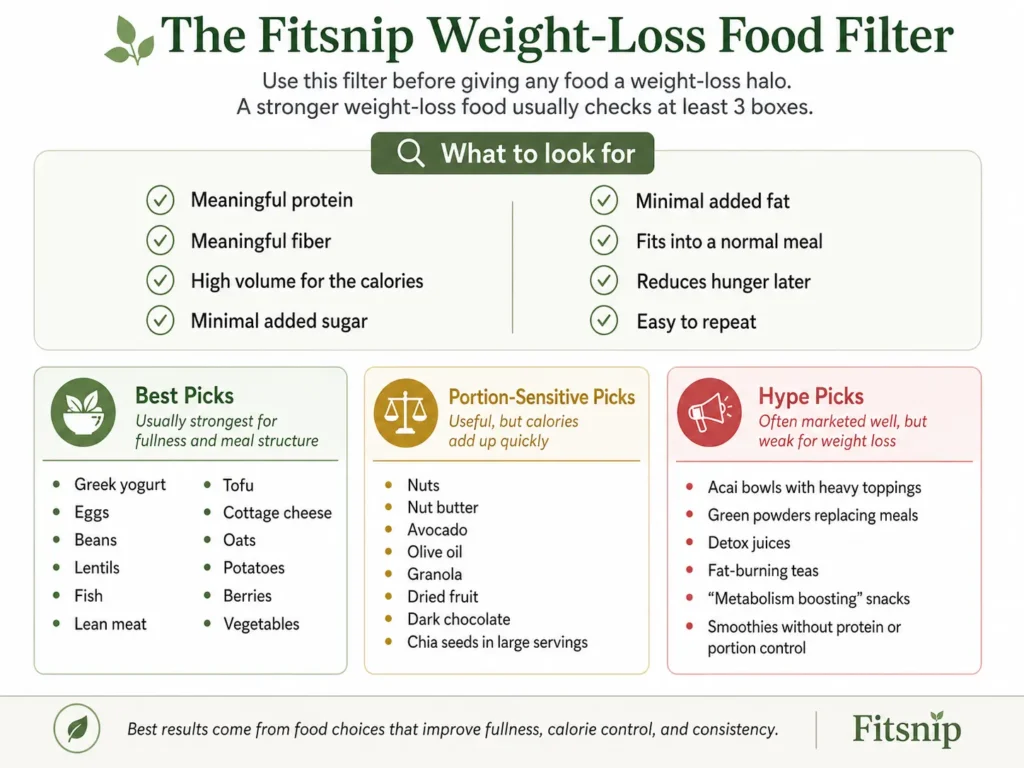
Use this filter before giving any food a weight-loss halo.
A strong weight-loss food usually checks at least three of these boxes:
- It contains meaningful protein.
- It contains meaningful fiber.
- It has high volume for the calories.
- It has minimal added sugar.
- It has minimal added fat.
- It fits into a normal meal.
- It reduces hunger later.
- It is easy to repeat.
That gives us three categories.
Best picks
These foods usually combine protein, fiber, volume, or strong meal structure.
Examples:
- Greek yogurt
- Eggs
- Beans
- Lentils
- Fish
- Lean meat
- Tofu
- Cottage cheese
- Oats
- Potatoes
- Berries
- Vegetables
Useful but portion-sensitive picks
These foods can be healthy, but calories add up quickly.
Examples:
- Nuts
- Nut butter
- Avocado
- Olive oil
- Granola
- Dried fruit
- Dark chocolate
- Chia seeds in large servings
Hype picks
These foods may have nutrients, but the weight-loss claim is usually weak, exaggerated, or dependent on the rest of the diet.
Examples:
- Acai bowls with heavy toppings
- Green powders replacing actual meals
- Detox juices
- Fat-burning teas
- “Metabolism boosting” snacks
- Smoothies without protein or portion control
This filter keeps the article honest. Trendiness adds nothing unless the food helps the meal work.
Best Superfoods for Weight Loss, Ranked by What They Actually Do
This list is ranked by usefulness rather than trendiness.
1. Greek yogurt or skyr
Greek yogurt and skyr are useful because they provide protein in a simple, repeatable form. They work well at breakfast, as a snack, or as a base for a higher-protein dessert.
Best use:
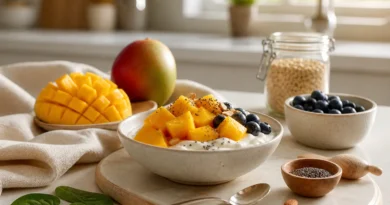
- Greek yogurt
- Berries
- Chia or ground flax
- A small amount of oats or low-sugar granola
What to watch:
Choose plain or lower-sugar versions when possible. Some flavored yogurts drift closer to dessert than breakfast.
2. Eggs
Eggs are simple, affordable, and filling. They also help turn breakfast into a real meal instead of a quick carbohydrate hit.
Best use:
- Eggs with spinach and salsa
- Eggs with potatoes and vegetables
- Boiled eggs with fruit
- Omelet with leftover vegetables
What to watch:
Eggs are useful, but a breakfast built around eggs, butter, cheese, bacon, and toast can become calorie-dense fast. The supporting cast matters.
3. Beans and lentils
Beans and lentils are some of the most underrated weight-loss foods because they bring protein and fiber together.
They work in chili, soups, bowls, salads, tacos, and simple meal prep. They also make meals feel heavier and more satisfying without relying on large amounts of added fat.
Best use:
- Lentil chili
- Black bean bowl
- Chickpea salad
- Bean soup
- Turkey and bean skillet
What to watch:
If you are not used to eating beans, increase slowly. A sudden fiber jump can cause bloating or digestive discomfort.
4. Berries
Berries give you sweetness, fiber, water, and volume with fewer calories than many desserts or snack foods.
They work especially well because they help make protein foods more enjoyable.
Best use:
- Berries with Greek yogurt
- Berries in oatmeal
- Berries with cottage cheese
- Frozen berries warmed into a simple sauce
What to watch:
Berries are strong. Berry-flavored desserts, sweetened smoothie bowls, and oversized acai bowls are a different category.
5. Oats
Oats are useful because they are simple, filling, and easy to combine with protein.
A bowl of plain oats alone may not hold everyone for long. Oats with Greek yogurt, protein powder, cottage cheese, or eggs on the side can become a stronger meal.
Best use:
- Oats with Greek yogurt and berries
- Overnight oats with chia
- Oatmeal with protein added
- Savory oats with eggs
What to watch:
Instant packets can contain added sugar. Large bowls with nut butter, honey, granola, and dried fruit can become very calorie-dense.
6. Leafy greens and cruciferous vegetables
Leafy greens and cruciferous vegetables are plain, practical, and useful.
Spinach, kale, romaine, broccoli, Brussels sprouts, cabbage, cauliflower, and arugula add volume, fiber, and micronutrients for relatively few calories. Mayo Clinic specifically notes that vegetables tend to be low in energy density because they contain water and fiber (Mayo Clinic).
Best use:
- Add spinach to eggs
- Add cabbage to bowls
- Use salad greens under protein
- Roast broccoli with a measured amount of oil
- Add frozen vegetables to soups or skillets
What to watch:
Vegetables can become calorie-dense when the main flavor comes from heavy dressing, butter, cheese, or oil.
7. Potatoes and sweet potatoes
Potatoes often get unfairly blamed for weight gain because people associate them with fries, chips, loaded baked potatoes, and large restaurant portions.
Plain boiled, baked, or roasted potatoes can be filling. A classic satiety study found boiled potatoes produced the highest satiety score among the tested foods (Holt et al., 1995).
Best use:
- Baked potato with Greek yogurt and salsa
- Boiled potatoes with eggs and vegetables
- Roasted potatoes with lean protein
- Sweet potato with cottage cheese or turkey chili
What to watch:
The preparation changes everything. Fries and heavily loaded potatoes do not behave the same way as a plain potato in a balanced meal.
8. Fish and lean protein
Fish and lean proteins help anchor a meal. They give the plate structure and make vegetables and carbohydrates more satisfying.
Good options include salmon, tuna, cod, chicken breast, turkey, lean beef, tofu, tempeh, shrimp, and low-fat cottage cheese.
Best use:
- Salmon with potatoes and vegetables
- Tuna bowl with beans and greens
- Chicken with roasted vegetables
- Tofu stir-fry with rice and broccoli
What to watch:
Fatty fish like salmon can be excellent, but it still contains calories. That can still fit. Pair it with lower-energy-density sides instead of adding heavy sauces and large portions of oils.
9. Chia seeds and ground flaxseed
Chia seeds and flaxseed can help because they add fiber and texture. They are especially useful in yogurt, oatmeal, and smoothies.
Best use:
- 1 tablespoon chia in Greek yogurt
- Ground flax in oatmeal
- Chia with berries and yogurt
- Smoothie add-in with protein
What to watch:
Seeds are calorie-dense. A spoonful can help. A heavy pour can quietly add more calories than expected.
10. Whole fruit
Whole fruit is often more useful for weight loss than juice because it contains fiber, water, and structure. The act of chewing also slows the snack down.
Fruit juice can fit into a healthy diet, but it is easier to drink calories quickly. A 2024 systematic review and meta-analysis in JAMA Pediatrics found that 100 percent fruit juice intake was associated with small BMI gains in children, while adult findings were more mixed and appeared partly related to total energy intake (Nguyen et al., 2024).
Best use:
- Apple with Greek yogurt
- Pear with cottage cheese
- Orange with eggs
- Banana before training
- Berries after dinner
What to watch:
Whole fruit is usually the better default for fullness. Juice is easier to overconsume.
Superfoods That Can Slow Your Progress
Some foods have strong health value but still make fat loss harder when portions are loose.
That makes role and portion more important than the health halo.
Nuts and nut butter
Nuts provide healthy fats, minerals, and some fiber. They are also easy to overeat.
A handful can fit. A jar beside the couch is a different situation.
Use them as a measured fat source rather than a free-pour health snack.
Avocado
Avocado is nutrient-rich and can make meals more satisfying. It is also calorie-dense.
Use a portion that fits the plate. For many people, that means a quarter to a half avocado, depending on the meal and total calorie needs.
Olive oil
Olive oil can be part of a healthy diet, but oil is pure fat and easy to pour generously.
A measured tablespoon is very different from free-pouring over a pan, salad, and finished plate.
Granola
Granola often sounds healthier than it behaves. It can contain oats, nuts, seeds, dried fruit, added sugar, and oil in a small serving.
Use it as a topping rather than the main bowl.
Smoothies
Smoothies can work for weight loss if they contain protein, fiber, and controlled portions.
They can also become drinkable calorie bombs when they include juice, honey, nut butter, granola, oversized fruit portions, and no meaningful protein.
A better smoothie structure:
- Protein base
- Fruit
- Spinach or vegetables
- Chia or flax
- Water, milk, or unsweetened liquid
- No random extras unless they serve a purpose
Acai bowls
Acai bowls are often marketed as superfood meals, but many are built with fruit puree, granola, honey, nut butter, coconut, chocolate, and extra toppings.
That can be a fine meal. Treat it as a full meal rather than an automatic weight-loss food.
Dark chocolate
Dark chocolate can fit into a healthy diet. Its weight-loss value is limited.
Use it as an intentional small dessert rather than a metabolic strategy.
Coaching check: Healthy fats are still fats. They can support a good diet, but they do not bypass portion awareness.
How to Build a Weight-Loss Meal That Actually Keeps You Full
A better weight-loss plate can be built with ordinary foods.
Use this structure.
The Fitsnip Better Plate Formula
- Start with protein
Choose Greek yogurt, eggs, fish, chicken, lean meat, tofu, tempeh, cottage cheese, beans, lentils, or a similar protein source. - Add high-volume plants
Use vegetables, salad greens, berries, apples, pears, broccoli, cabbage, peppers, zucchini, spinach, or cauliflower. - Add a fiber-rich carbohydrate
Choose oats, potatoes, sweet potatoes, beans, lentils, brown rice, quinoa, whole-grain bread, or fruit. - Add a measured fat source
Use avocado, olive oil, nuts, seeds, cheese, or dressing with awareness. - Add flavor without turning the meal into a calorie trap
Use salsa, mustard, vinegar, citrus, herbs, spices, hot sauce, pickles, garlic, onion, or lower-calorie sauces.
Example plates
Greek yogurt plate: Greek yogurt, berries, chia, and a small amount of oats.
Egg plate: Eggs, potatoes, spinach, and salsa.
Lentil bowl: Lentils, roasted vegetables, greens, and Greek-yogurt sauce.
Fish plate: Salmon, broccoli, potatoes, and lemon.
Chicken bowl: Chicken, black beans, greens, salsa, and a measured portion of avocado.
Cottage cheese bowl: Cottage cheese, berries, cinnamon, and walnuts.
Fitsnip’s protein guide explains what to do when whole-food protein is hard to hit consistently, including when a supplement is useful and when regular food is enough.
Which Superfoods Work as a Nighttime Snack?
Nighttime eating is where many weight-loss plans break.
The issue is usually the type of food, the portion, and what happened earlier in the day. If breakfast and lunch were low in protein and fiber, nighttime hunger is more likely. If dinner was small or mostly refined carbohydrates, the snack urge may show up stronger.
Good nighttime options usually combine protein, fiber, or volume.
Better nighttime snack options
- Greek yogurt with berries
- Cottage cheese with fruit
- Boiled eggs with vegetables
- Apple with measured peanut butter
- Air-popped popcorn
- Protein smoothie with controlled ingredients
- Oatmeal with Greek yogurt mixed in
- Chia pudding made with a high-protein base
Weaker nighttime snack options
- Granola by the handful
- Nut butter from the jar
- Fruit juice
- Sweetened cereal
- Trail mix eaten from the bag
- Acai bowl with heavy toppings
- Smoothies without protein
Coaching check: If nighttime hunger shows up every night, audit breakfast and lunch before blaming willpower.
What Does a Full Day of Eating for Weight Loss Actually Look Like?
This simple template is flexible. Adjust portions based on your body size, training, appetite, goals, and medical needs.
Breakfast
Option 1: Greek yogurt, berries, chia, and oats.
Option 2: Eggs, potatoes, spinach, and salsa.
Goal: protein plus fiber early.
Lunch
Option 1: Lentil chili with vegetables.
Option 2: Chicken bowl with beans, greens, salsa, and avocado.
Goal: protein, fiber, and enough volume to prevent afternoon grazing.
Snack
Option 1: Cottage cheese with fruit.
Option 2: Apple with a measured portion of peanut butter.
Option 3: Greek yogurt with cinnamon.
Goal: planned fullness, not random snacking.
Dinner
Option 1: Fish, roasted broccoli, potatoes, and lemon.
Option 2: Turkey and bean bowl with vegetables.
Option 3: Tofu stir-fry with vegetables and rice.
Goal: a real plate instead of a tiny diet dinner that sends you back to the pantry.
Optional evening snack
Option 1: Greek yogurt and berries.
Option 2: Air-popped popcorn.
Option 3: Cottage cheese and fruit.
Goal: controlled, boring enough to stop at one serving, satisfying enough to prevent a larger snack spiral.
Why Superfoods May Not Be Working for Your Weight Loss
If you are eating superfoods and seeing no progress, one of these problems is probably happening.
You added superfoods without changing the rest of the diet
Adding chia seeds, blueberries, avocado, or green powder to an already high-calorie diet may increase nutritional quality without creating fat loss.
A better question: What food did this replace?
If berries replace dessert, that may help. If berries, honey, granola, and nut butter are added on top of the same breakfast, the calorie load may rise.
You are drinking too many calories
Smoothies, juices, fancy coffees, sports drinks, and healthy-looking bottled drinks can add calories without the same fullness as solid food.
This is one reason whole fruit usually beats juice for weight-loss fullness.
Your meals are too low in protein
Many people try to lose weight by eating lighter meals, but they accidentally make meals less filling.
A salad with vegetables and dressing may be low-calorie, but it may also leave you hungry. Add chicken, tuna, eggs, tofu, beans, lentils, Greek yogurt dressing, or cottage cheese on the side.
Your healthy fats are unmeasured
Avocado, olive oil, nuts, seeds, and nut butter can all fit into a healthy diet. They can also erase the calorie deficit when portions are casual.
You do not have to fear them. You do have to count them as real energy.
You are chasing novelty instead of building meals
A new superfood every week feels productive. A repeatable meal structure works better.
The body responds to the full pattern, not the trendiest ingredient.
You are ignoring sleep, stress, and training
Food matters, but appetite does not exist in isolation. Poor sleep, high stress, low movement, and inconsistent training can make hunger harder to manage.
A better plate helps. A better routine helps even more.
Trust-First Product Note
Fitsnip may review products in separate guides, but this article is not a push to buy one. If you choose a product, prioritize clear criteria, credible testing, simple ingredients or specifications, and fit for your actual goals.
FAQ
What is the best superfood for weight loss?
There is no single best superfood for weight loss. The most useful choices usually help with protein, fiber, fullness, or food volume. Greek yogurt, eggs, beans, lentils, berries, oats, potatoes, and vegetables are strong options.
What are the 5 superfoods to burn belly fat?
No food burns belly fat directly. Five useful foods for fat loss are Greek yogurt, eggs, beans or lentils, berries, and potatoes because they can help with fullness, protein, fiber, and calorie control.
Which food burns the most belly fat?
No food burns the most belly fat. Belly fat loss comes from a sustained calorie deficit, strength training, movement, sleep, and consistency. Choose foods that keep you full, such as eggs, Greek yogurt, beans, oats, and vegetables.
What foods keep you full the longest?
High-protein and high-fiber foods tend to keep hunger lower for longer. Practical options include Greek yogurt, eggs, lentils, beans, oatmeal, potatoes, berries, and vegetables.
Are chia seeds good for weight loss?
Chia seeds can help because they contain fiber and absorb liquid, which may support fullness. They work best as a small add-on to yogurt, oatmeal, or smoothies.
Is it better to eat superfoods whole or in a smoothie?
Whole foods are usually better for fullness because chewing slows the meal down. A smoothie can still work if it contains protein, fiber, and controlled portions.
Are acai bowls good for weight loss?
Acai bowls can be nutritious, but many are high in calories because of granola, honey, nut butter, and large fruit portions. Treat them as a full meal, not an automatic weight-loss food.
Bottom Line
Superfoods can be useful, but the label should not make the decision for you.
For weight loss, the strongest foods usually help through protein, fiber, food volume, nutrient density, and repeatability. Greek yogurt, eggs, beans, lentils, berries, oats, potatoes, vegetables, fish, and whole fruit are useful because they make better meals easier to build.
The practical move is simple: stop chasing magical ingredients and start building plates that keep you full.
Use the Fitsnip Weight-Loss Food Filter. Ask what the food actually does. If it helps you eat a satisfying meal, control hunger, and repeat the behavior tomorrow, it belongs.
Sources
Harvard T.H. Chan School of Public Health. “Superfoods or Superhype?” The Nutrition Source.
https://nutritionsource.hsph.harvard.edu/superfoods/
Mayo Clinic Staff. “Weight loss: Feel full on fewer calories.” Mayo Clinic. 2024.
https://www.mayoclinic.org/healthy-lifestyle/weight-loss/in-depth/weight-loss/art-20044318
Paddon-Jones D, Westman E, Mattes RD, Wolfe RR, Astrup A, Westerterp-Plantenga M. “Protein, weight management, and satiety.” American Journal of Clinical Nutrition. 2008.
https://pubmed.ncbi.nlm.nih.gov/18469287/
Akhlaghi M. “The role of dietary fibers in regulating appetite, an overview of mechanisms and weight consequences.” Critical Reviews in Food Science and Nutrition. 2024.
https://pubmed.ncbi.nlm.nih.gov/36193993/
Ello-Martin JA, Roe LS, Ledikwe JH, Beach AM, Rolls BJ. “Dietary energy density in the treatment of obesity: a year-long trial comparing 2 weight-loss diets.” American Journal of Clinical Nutrition. 2007.
https://pubmed.ncbi.nlm.nih.gov/17556681/
Holt SH, Miller JC, Petocz P, Farmakalidis E. “A satiety index of common foods.” European Journal of Clinical Nutrition. 1995.
https://pubmed.ncbi.nlm.nih.gov/7498104/
Nguyen M, Jarvis SE, Tinajero MG, et al. “Consumption of 100% Fruit Juice and Body Weight in Children and Adults: A Systematic Review and Meta-Analysis.” JAMA Pediatrics. 2024.
https://pmc.ncbi.nlm.nih.gov/articles/PMC10792499/

J.D. Wilson, PN1, is the founder of Fitsnip.com, a Precision Nutrition Level 1 Coach, certified meditation teacher, and author of The Comfort Trap: The Quiet Cost of an Unchallenged Life. His work focuses on practical, evidence-based nutrition, strength training, behavior change, sleep, stress, recovery, and everyday health decisions for adults who want clear guidance without hype. About J.D. Wilson