Best Fitness Trackers Without a Screen
By J.D. Wilson, PN1
Last reviewed: April 30, 2026
Health disclaimer: This content is for informational purposes only and is not a substitute for professional medical advice, diagnosis, or treatment. Always consult a qualified healthcare provider before making changes to your diet, supplement routine, or exercise program.
Product link note: This article includes product links for reader convenience. These are not affiliate links, and Fitsnip does not currently earn compensation if you purchase through them.
Our product reviews follow the Fitsnip How We Test process.
Quick Summary
The best fitness tracker without a screen depends on the problem you want the tracker to solve.
Choose a screenless band like Polar Loop if you want passive tracking without notifications or a smartwatch display. Choose WHOOP 5.0 if you want a deeper recovery and training platform and are comfortable with a membership model. Choose a smart ring like Oura Ring 4 or Samsung Galaxy Ring if sleep tracking, recovery trends, and a low visual profile matter more than workout controls. Choose a compact tracker like Fitbit Inspire 3 only if you are willing to accept a small screen in exchange for a familiar Fitbit experience.
The key is simple: buy the form factor you will actually wear.
Jump to Sections
- Best Fitness Trackers Without a Screen: Quick Picks
- How to Choose a Screenless Fitness Tracker
- The Fitsnip Decision Filter
- Best Screenless Fitness Trackers and Alternatives
- What About Fitbit Air?
- FAQ
Best Fitness Trackers Without a Screen: Quick Picks
Use these quick picks as the fast filter before reading the full breakdown.
Polar Loop
Best for: Screen-free band with no monthly fee
Screen: No
Subscription model: No required subscription
Main caution: Newer product category
WHOOP 5.0
Best for: Recovery, strain, and training data
Screen: No
Subscription model: Membership-based
Main caution: Ongoing cost
Oura Ring 4
Best for: Premium sleep and recovery insights
Screen: No
Subscription model: Paid membership for full features
Main caution: Expensive ecosystem
Samsung Galaxy Ring
Best for: Samsung phone users who want a ring
Screen: No
Subscription model: Samsung ecosystem
Main caution: Best fit for Galaxy users
Fitbit Inspire 3
Best for: Small tracker fallback
Screen: Yes, small screen
Subscription model: Fitbit app and Premium options
Main caution: Not truly screenless
How to Choose a Screenless Fitness Tracker
Most people compare fitness trackers by features. A better starting point is this:
Where will this device live on your body, and will you still want to wear it after two weeks?
A tracker can have excellent sensors, a clean app, and strong recovery scores. None of that matters if the band annoys you at night, the ring feels strange during lifting, or the subscription makes you resent opening the app.
Consumer wearables are best used as pattern tools. They can help you notice trends in sleep, resting heart rate, heart rate variability, movement, and training load. They should never replace medical testing, clinical judgment, or basic self-awareness. A 2024 systematic review and meta-analysis found that wearable activity trackers show promise for some forms of health event detection, but the authors also emphasized the need for more research, better validation, and caution around false positives and false negatives. (JMIR mHealth and uHealth)
That matters because screenless trackers often sell the feeling of calm. They remove the glowing screen, but they still create data. Used well, that data can help. Used obsessively, it can become another source of noise.
Coaching check: Buy the tracker that supports the behavior you want, not the one with the longest spec sheet.
The Fitsnip Decision Filter
Before choosing a tracker, answer these six questions.
1. Do you want wrist tracking, finger tracking, or both?
A wrist band usually works better for people who lift, run, walk, sleep track, and want a tracker that feels familiar.
A ring works better for people who hate wrist devices, wear analog watches, or want something visually subtle.
The tradeoff is practical. Rings can feel awkward during gripping exercises, barbell work, pull-ups, kettlebells, and heavy dumbbell sessions. Wrist bands may feel more secure during training but can bother people with small wrists or sensitive skin.
2. Do you want zero screen or just less screen?
Some people truly want no screen at all.
Others just want to avoid a large smartwatch. A tiny Fitbit-style display may still be acceptable if it gives them step count, heart rate, timers, and simple feedback without turning the wrist into a phone.
This matters because a strict screenless search removes useful compact trackers from the list.
3. Do you care more about sleep or workouts?
Smart rings often shine for passive sleep and recovery trends.
Screenless bands can work well for recovery and workouts, depending on the sensor fit and app quality.
Compact wrist trackers are still easier when you want on-device workout controls.
4. Are you willing to pay a subscription?
This is one of the biggest buying filters.
A cheaper device can become expensive if the useful insights depend on a paid plan. A more expensive one-time device can feel better over time if the core data remains available without monthly fees.
WHOOP is built around a membership model. Oura Ring 4 also depends on membership for the fuller software experience. Polar Loop is positioned as screen-free and subscription-free. (WHOOP, Oura, Polar)
5. Do you already use an ecosystem?
Samsung Galaxy Ring makes the most sense if you already use a Samsung Galaxy phone and Samsung Health.
Fitbit makes the most sense if you already like the Fitbit app.
WHOOP makes the most sense if you want its recovery, strain, and coaching platform.
The device is only half the purchase. The app is the other half.
6. Will the tracker make you calmer or more anxious?
A good tracker should make patterns easier to see.
If you know you tend to obsess over sleep scores, recovery numbers, or readiness warnings, choose a calmer device and keep your checking routine limited. The American Academy of Sleep Medicine has stated that consumer sleep technology should be considered within a broader sleep evaluation and should not replace validated diagnostic testing. (Journal of Clinical Sleep Medicine)
Coaching check: If a tracker makes you train smarter, sleep more consistently, and move more often, it is helping. If it makes you check numbers all day and trust yourself less, the product is becoming a problem.
Best Screenless Fitness Trackers and Alternatives
1. Polar Loop: Best screenless band for people who hate subscriptions
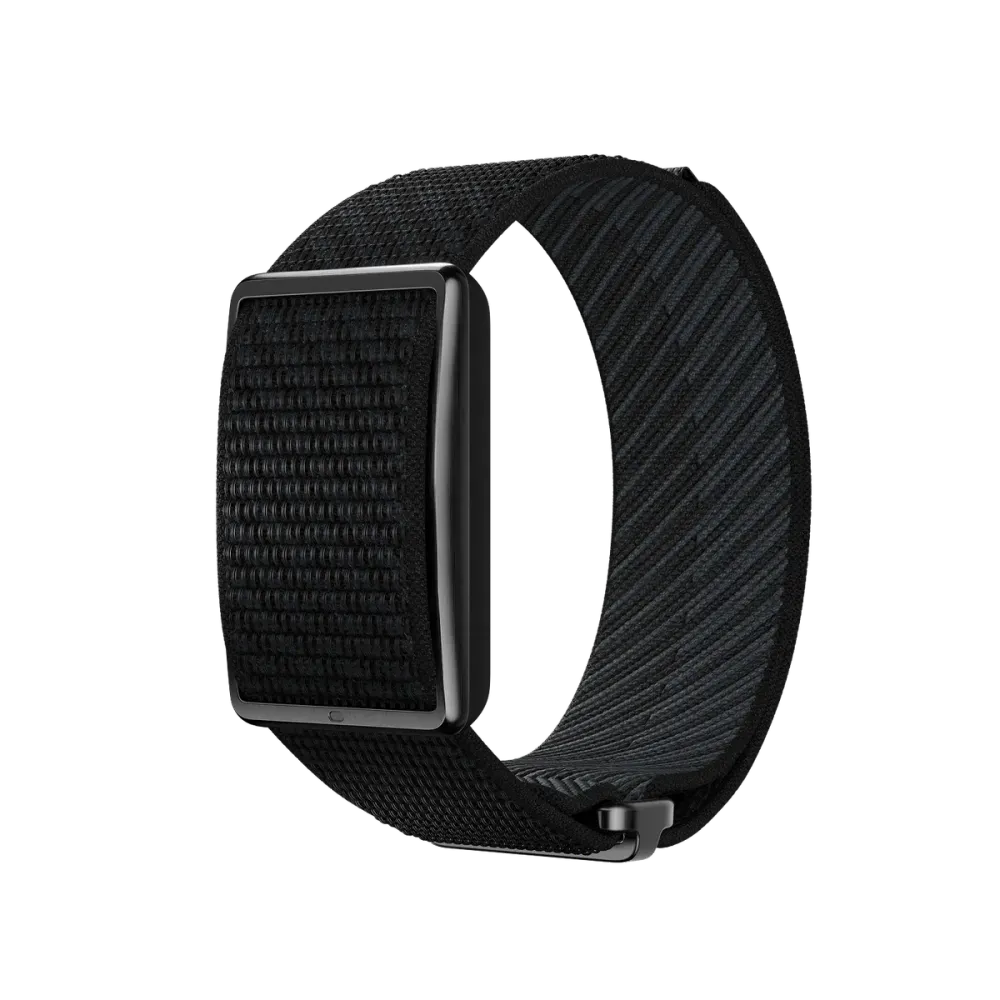
A screen-free fitness band for people who want sleep, recovery, heart rate, and activity trends without a smartwatch display or required monthly subscription.
• True screen-free wrist tracker
• No required subscription
• Tracks sleep, recovery, activity, and heart rate
• Best for low-distraction daily tracking
• Strong fit for people who dislike smartwatch screens
Polar Loop is the cleanest fit for someone who wants a true screen-free band without a monthly subscription. Polar describes it as a screen-free, subscription-free fitness band for sleep, recovery, and daily activity tracking. The official page also lists 24/7 activity tracking, step count, continuous heart rate, Sleep Plus Stages, Nightly Recharge, and SleepWise among its features. (Polar)
Polar has built its reputation in sports wearables and heart-rate monitoring for decades, which gives the Loop more credibility than a generic screenless band from an unknown brand. Polar’s own launch announcement describes the company as a global leader in wearable sports and fitness technology for nearly 50 years. (Polar Media Room)
The main appeal is restraint. No watch face. No notification screen. No second phone feeling on your wrist.
This is the best fit if you want a quiet health band that works in the background while you check the app later. It also makes sense if you already respect Polar’s history with heart-rate tracking and want a simpler wearable than a full Polar watch.
The caution is that Polar Loop is still part of a newer screenless category for mainstream buyers. That does not make it weak, but it means early real-world reviews, comfort feedback, and app experience should matter before you buy.
Best for: people who want a true screenless wrist tracker with no required monthly fee.
Skip it if: you want a built-in display, GPS maps, smartwatch features, or on-wrist workout controls.
Fitsnip verdict: Polar Loop is the right pick for the reader who wants health tracking in the background without turning the wrist into another screen.
2. WHOOP 5.0: Best for serious recovery and training data
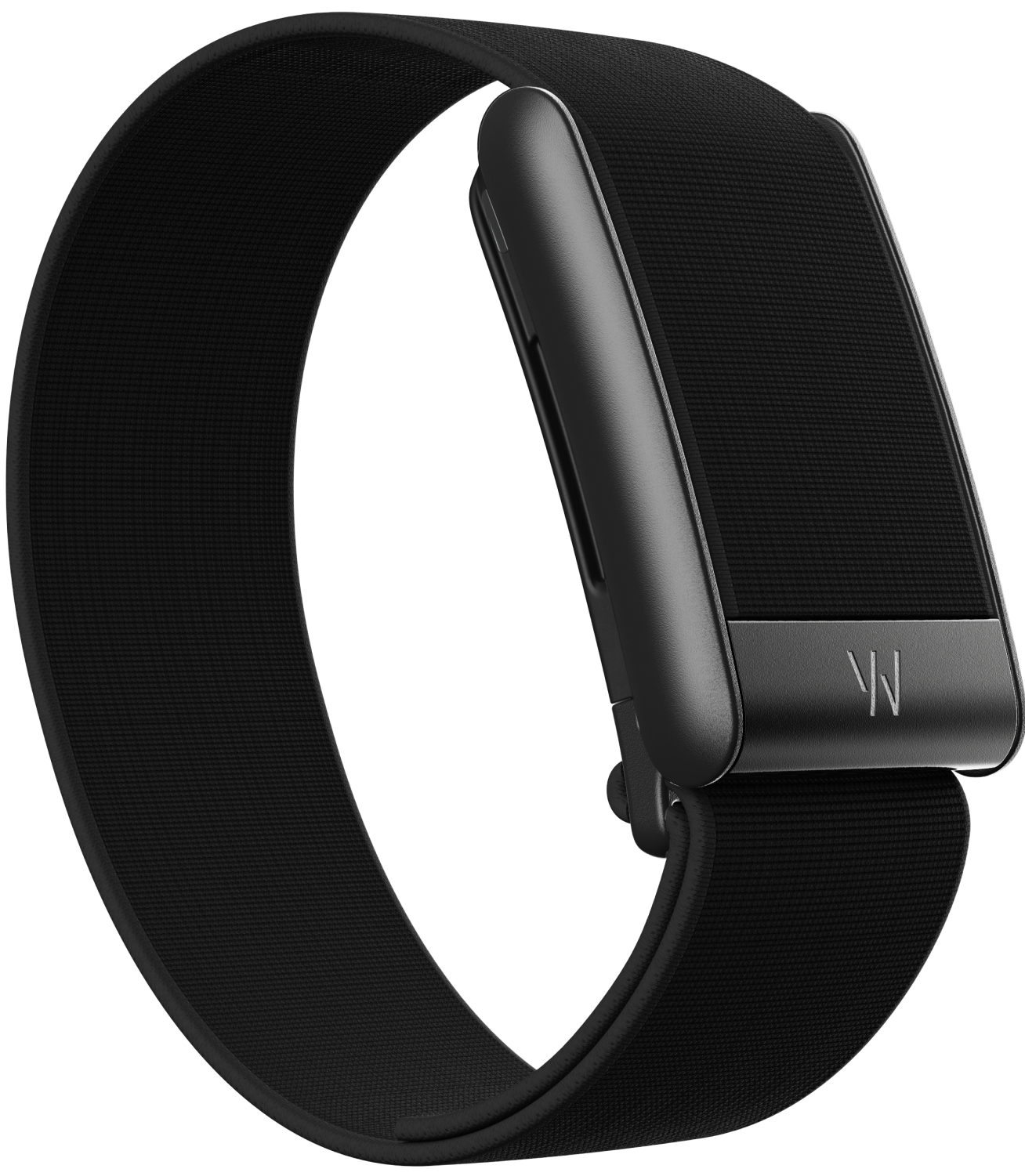
A screenless recovery and training tracker built for people who want deeper insight into sleep, strain, recovery, and long-term performance patterns.
• Screenless recovery-focused wearable
• Tracks sleep, strain, and recovery trends
• Includes personalized coaching features
• Best for athletes and serious training
• Membership-based model
WHOOP is the most established option for people who want a screenless recovery platform. The current membership page lists WHOOP 5.0 with 14+ day battery life, sleep, strain, recovery insights, personalized coaching, VO2 max, and heart-rate zones. (WHOOP)
This is the most athlete-focused pick on the list. It works best for people who care about training stress, recovery patterns, sleep consistency, and long-term performance feedback.
The downside is the model. WHOOP is built around membership. For some buyers, that is fine because the platform is the product. For others, it creates subscription fatigue.
WHOOP also requires the right mindset. Recovery scores can help guide training, but they should not become a substitute for common sense. A low recovery day can mean you need rest, but it can also mean you need an easier session, better food, hydration, or less late-night screen time.
Best for: athletes, lifters, runners, and data-driven users who want recovery and strain guidance.
Skip it if: you hate subscriptions or only want basic steps, sleep, and heart rate.
Fitsnip verdict: WHOOP 5.0 is the right pick for the reader who wants a serious recovery platform and accepts that the membership is part of the product.
3. Oura Ring 4: Best premium smart ring for sleep and recovery trends
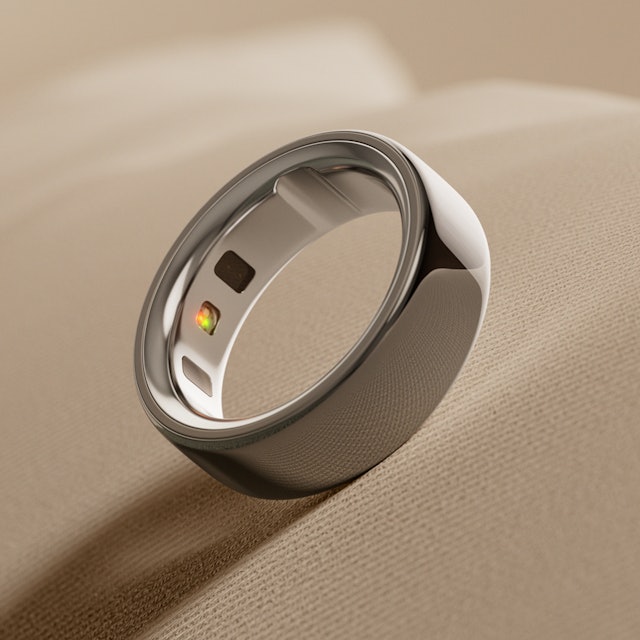
A premium smart ring for people who want subtle sleep, recovery, stress, and wellness tracking without wearing a fitness band or smartwatch.
• Low-profile ring design
• Strong sleep and recovery focus
• Tracks heart rate, HRV, temperature trends, and activity
• Typically 5 to 8 days of battery life
• Paid membership needed for the fuller experience
Oura Ring 4 is the strongest fit for people who want health tracking without wearing anything on the wrist. Oura says Ring 4 uses Smart Sensing, adapts to the finger, and collects continuous day-and-night data. Its support documentation lists sensors for blood oxygen during sleep, heart rate, HRV, respiration during sleep, temperature trends, and activity tracking. (Oura Help)
Oura’s battery documentation says Ring 4 achieved a battery life of 5 to 8 days in controlled testing, with real battery life varying by ring size, blood oxygen sensing, activity detection, ring age, usage, and other features. (Oura Help)
The advantage is comfort and style. A ring is easier to wear with an analog watch, dress clothes, or a minimalist setup. It also removes the two-watch problem.
The downside is cost and ecosystem. Oura’s membership page says membership gives users access to deeper body data and personalized insights. (Oura) That means buyers should think about the ring and membership together.
Oura is strongest when used for trends: sleep timing, resting heart rate, HRV, temperature, readiness, and recovery patterns. It is less ideal as a rugged workout tracker for heavy gripping, barbell work, or people who dislike rings during training.
Best for: people who want premium sleep, recovery, and wellness tracking in a subtle ring.
Skip it if: you do heavy lifting with rings off, dislike subscriptions, or want on-wrist workout controls.
Fitsnip verdict: Oura Ring 4 is the right pick for the reader who wants the most polished ring-based sleep and recovery experience and accepts the ongoing membership cost.
4. Samsung Galaxy Ring: Best screenless ring for Samsung users

A screenless smart ring built for Samsung users who want sleep, heart rate, activity, and Energy Score insights inside the Samsung Health ecosystem.
• Screenless ring design
• Best for Samsung Galaxy users
• Tracks sleep, heart rate, walking, and running
• Works with Samsung Health
• Requires compatible Samsung ecosystem setup for key features
Samsung Galaxy Ring is the cleanest ring option for people already inside the Samsung ecosystem. Samsung describes it as a lightweight titanium ring with wellness tracking enhanced by Galaxy AI. The official page lists Energy Score, sleep tracking, heart-rate tracking, automatic walking and running tracking, and Samsung Health integration. (Samsung)
The practical advantage is ecosystem fit. If you already use a Samsung Galaxy phone and Samsung Health, this ring will make more sense than it would for an iPhone user or someone who prefers Fitbit, Garmin, Apple Health, or WHOOP.
The Galaxy Ring also has a cleaner visual profile than a watch. For someone who wants sleep and activity data without a smartwatch, that matters.
The caution is compatibility and ecosystem lock-in. Samsung says Galaxy Ring requires a compatible smartphone, Samsung Health app, and Samsung account for key features. (Samsung)
Best for: Samsung Galaxy users who want a screenless ring tied to Samsung Health.
Skip it if: you use iPhone, dislike ecosystem lock-in, or want a platform-neutral tracker.
Fitsnip verdict: Samsung Galaxy Ring is the right pick for the reader who already uses a Galaxy phone and wants screenless tracking without leaving Samsung Health.
5. Fitbit Inspire 3: Best small tracker fallback if you can accept a screen

A slim Fitbit tracker for people who want something smaller than a smartwatch and do not mind a small screen for basic health and fitness feedback.
• Slim, lightweight tracker
• Small color touchscreen
• Tracks sleep, stress, heart rate, and activity trends
• Good fallback for Fitbit users
• Not fully screenless, but less bulky than a smartwatch
Fitbit Inspire 3 is included here as a fallback, not as a true screenless tracker. It has a small color touchscreen, so it does not fit the strict no-screen category.
It still belongs in the conversation because many people searching for a screenless tracker actually want something less bulky than a smartwatch. Google describes Inspire 3 as a slim tracker with sleep tracking, sleep stages, Sleep Score, a color touchscreen, call and app notifications, and up to 10 day battery life, with battery life varying by use and other factors. (Google Store)
This is the easiest pick for someone who wants a familiar mainstream tracker and does not mind a small display. It also makes sense if you already use the Fitbit app and want a lower-friction option than a large smartwatch.
The caution is distraction. A small screen is still a screen. If your goal is to reduce wrist checking completely, choose Polar Loop, WHOOP, Oura, or Galaxy Ring instead.
Fitbit’s own readiness documentation is also a useful reminder that tracker data needs context. Google says readiness score combines HRV, recent sleep, and resting heart rate, and it also notes that heart-rate tracking accuracy can be affected by physiology, device location, movement, and activity. (Google Fitbit Help)
Best for: people who want a slim Fitbit-style tracker instead of a big smartwatch.
Skip it if: you want a fully screen-free device.
Fitsnip verdict: Fitbit Inspire 3 is the right pick for the reader who wants a small, familiar tracker and cares more about simplicity than having a fully screenless device.
What About Fitbit Air?
Fitbit Air is worth watching because it may become Google’s answer to the screenless tracker category.
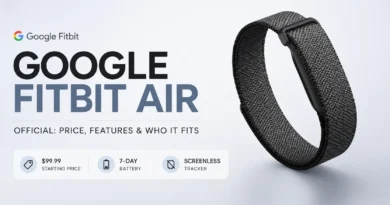
Google has now officially announced Fitbit Air, making it one of the clearest new options for people who want a screenless fitness tracker without a smartwatch display.
Early reporting suggests it could be a display-free Fitbit device focused on passive health tracking rather than smartwatch-style interaction. That would put it closer to Polar Loop and WHOOP than a standard Fitbit watch. The problem is that buyers still need confirmed details before treating it like a real recommendation.
Until Google officially confirms the product, wait for:
- Battery life
- Sensor list
- Free versus paid feature breakdown
- Compatibility details
- Comfort and sizing information
- Independent accuracy and wearability reviews
- Whether it works alongside Pixel Watch or other Fitbit devices
For a deeper breakdown of the rumors, expected positioning, and what would make the product worth buying, read Fitsnip’s full guide to the Google Fitbit Air screenless tracker.
Coaching check: Do not buy a health tracker on rumor momentum. Wait until the actual device proves comfort, usefulness, and reasonable long-term cost.
What Did We Leave Out?
A few products may deserve future review, but they were not included as main picks in this version.
RingConn Gen 2: RingConn’s official product page lists strong specs, including 10 to 12 days of battery life and no required subscription, but the same page showed “Out of stock” during final verification. That makes it unsuitable as a main current recommendation until availability is confirmed. (RingConn)
Amazfit Helio Strap: Amazfit’s official page lists strong features, including continuous heart-rate capture, no subscription hassle, more than 50 workout modes, and up to 10 days of battery life. The official page showed stock and availability issues during verification, so it stays off the main recommendation list for now. (Amazfit)
Cheap unknown smart rings: Avoid buying a generic smart ring only because it is cheap. Many low-cost rings make aggressive claims around blood pressure, sleep stages, oxygen, and recovery. If the brand has weak documentation, unclear app support, no update history, or vague sensor claims, the lower price may not be worth the risk.
How to Use a Screenless Tracker Without Becoming Obsessed
A screenless tracker helps most when you use it as a weekly pattern tool.
Look for trends like:
- Sleep gets worse after late caffeine.
- Resting heart rate rises after alcohol or poor sleep.
- HRV drops after hard training blocks.
- Step count falls during stressful weeks.
- Recovery improves when bedtime becomes consistent.
- Training feels better after lighter days.
Late caffeine is one of the easiest patterns to test because it can affect sleep timing, resting heart rate, and recovery signals. Fitsnip’s guide to coffee timing and health explains how dose, timing, sensitivity, context, and preparation shape the bigger picture.
Avoid judging your entire day by one score.
A tracker cannot know everything about your life. It does not know your mood, spiritual state, work pressure, family stress, pain level, food quality, or whether you simply need a walk outside.
Use the data, then return to your body.
Coaching check: Review wearable data at set times, such as morning and evening. Do not turn recovery tracking into hourly self-surveillance.
Final Verdict
The best fitness tracker without a screen is the one that fits your body, your budget, your phone ecosystem, and your tolerance for data.
For most people who want a clean screenless wrist tracker, Polar Loop is the best starting point because it removes the display and avoids a required monthly subscription.
For serious training and recovery, WHOOP 5.0 is the stronger platform if the membership cost makes sense.
For ring-based tracking, Oura Ring 4 is the polished premium option, while Samsung Galaxy Ring is the better fit for committed Samsung users.
For people who only want something smaller than a smartwatch, Fitbit Inspire 3 is the practical fallback.
The real win is restraint. A tracker should help you notice patterns, make better decisions, and live with more awareness. It should not become another device that pulls your attention away from the life you are trying to improve.
FAQ
What is the best fitness tracker without a screen?
Polar Loop is the cleanest screenless band option for most people who want no display and no required monthly subscription. WHOOP is better for recovery-focused training data if you accept the membership model.
Are screenless fitness trackers accurate?
They can be useful for trends in heart rate, sleep timing, activity, and recovery. Accuracy varies by device, fit, sensor placement, movement, skin characteristics, and the metric being measured.
Is WHOOP better than a fitness tracker?
WHOOP is better for recovery, strain, and training guidance. A basic fitness tracker is better if you mainly want steps, heart rate, sleep, and a lower long-term cost.
Is Oura better than WHOOP?
Oura is usually better for subtle sleep and recovery tracking in ring form. WHOOP is usually better for people who want a training-focused recovery platform on the wrist or arm.
Can a fitness tracker work without a subscription?
Yes. Some trackers offer useful features without a required subscription. Check what data remains free, because some brands reserve deeper insights, coaching, reports, or recovery tools for paid plans.
Should I get a smart ring or a fitness band?
Choose a smart ring if you hate wrist devices and mainly care about sleep and recovery trends. Choose a band if you train often, want secure workout tracking, or dislike wearing rings while lifting.
Are cheap smart rings worth it?
Some may be acceptable for basic trends, but many make health claims that are hard to verify. Prioritize brand documentation, app quality, update history, return policy, and realistic claims.
Should I wait for Fitbit Air?
Wait if you are curious about a lower-cost screenless Fitbit option. Buy now only if you need a tracker immediately and a current product clearly fits your needs.
Sources
Singh B, et al. “Real-World Accuracy of Wearable Activity Trackers for Detecting Medical Conditions: Systematic Review and Meta-Analysis.” JMIR mHealth and uHealth. 2024. https://mhealth.jmir.org/2024/1/e56972
Khosla S, et al. “Consumer Sleep Technology: An American Academy of Sleep Medicine Position Statement.” Journal of Clinical Sleep Medicine. 2018. https://pmc.ncbi.nlm.nih.gov/articles/PMC5940440/
Polar. “POLAR Loop.” Current product page. https://www.polar.com/us-en/loop
Polar. “Polar launches Polar Loop, its first screen-free, subscription-free wearable.” Polar Media Room. 2025. https://www.polar.com/en/media-room/polar-launches-polar-loop-first-screen-free-subscription-free-wearable
WHOOP. “Membership Options.” Current membership page. https://www.whoop.com/us/en/membership/
Oura. “Oura Ring 4.” Oura Help. Current support page. https://support.ouraring.com/hc/en-us/articles/33045011508115-Oura-Ring-4
Oura. “Oura Ring 4 Battery Life.” Oura Help. Current support page. https://support.ouraring.com/hc/en-us/articles/35694051065235-Oura-Ring-4-Battery-Life
Oura. “Oura Membership.” Current membership page. https://ouraring.com/membership
Samsung. “Galaxy Ring.” Current product page. https://www.samsung.com/us/rings/galaxy-ring/
Google Store. “Fitbit Inspire 3 Health & Fitness Tracker.” Current product page. https://store.google.com/product/fitbit_inspire_3
Google Fitbit Help. “What’s my readiness score in the Fitbit app?” Current support page. https://support.google.com/fitbit/answer/14236710
RingConn. “RingConn Gen 2 Smart Ring.” Current product page. https://ringconn.com/products/ringconn-gen-2
Amazfit. “Helio Strap.” Current product page. https://us.amazfit.com/products/helio-strap
Fitsnip. “Google Fitbit Air Could Be the Screenless Tracker People Actually Want.” Fitsnip.com. 2026. https://fitsnip.com/google-fitbit-air-screenless-tracker/

J.D. Wilson, PN1, is the founder of Fitsnip.com, a Precision Nutrition Level 1 Coach, certified meditation teacher, and author of The Comfort Trap: The Quiet Cost of an Unchallenged Life. His work focuses on practical, evidence-based nutrition, strength training, behavior change, sleep, stress, recovery, and everyday health decisions for adults who want clear guidance without hype. About J.D. Wilson