Do Men Over 40 Actually Need Protein Powder?
By J.D. Wilson, PN1
Last updated: May 4, 2026
Medical disclaimer: This content is for informational purposes only and is not a substitute for professional medical advice, diagnosis, or treatment. Always consult a qualified healthcare provider before making changes to your diet, supplement routine, or exercise program.
Our articles follow the Fitsnip editorial standards and source review process.
Quick Summary
Men over 40 do not all need protein powder. The useful question is whether your normal diet gives you enough protein to support training, muscle retention, recovery, and body composition.
Protein powder after 40 can help when breakfast is weak, appetite is low, calories are tight during fat loss, or your schedule makes whole-food protein harder to hit consistently.
Protein powder does not build muscle by itself. Muscle gain and muscle retention still depend on resistance training, total daily protein, recovery, sleep, calorie balance, and consistency.
For healthy men who train, protein needs should be treated as a range. The NIH Office of Dietary Supplements lists athlete protein needs around 1.2 to 2.0 grams per kilogram of body weight per day, while the International Society of Sports Nutrition places most exercising individuals around 1.4 to 2.0 grams per kilogram per day.
Men with chronic kidney disease or reduced kidney function should get medical guidance before increasing protein powder or total protein intake. The National Kidney Foundation explains that protein needs depend on body size, nutritional status, and kidney problems, and that people with CKD should ask a healthcare professional or kidney dietitian about the right amount and type of protein.
Jump to Sections
Do men over 40 need protein powder?
The four protein powder scenarios after 40
Why protein matters more after 40
Should you take protein powder? Five questions to answer first
Whey, casein, or plant protein after 40?
Whole food protein still matters
Common mistakes men make with protein powder after 40
Do Men Over 40 Need Protein Powder?
Most protein powder advice is written for younger lifters trying to gain size, supplement brands trying to sell tubs, or older adults being told to fight muscle loss in broad terms.
Those angles miss the practical question a man in his 40s is usually asking:
“Is this actually useful for me?”
The answer depends on your routine.
A man who lifts three days per week, skips breakfast, eats a light lunch, and tries to catch up at dinner may benefit from a shake. A man who already eats eggs, Greek yogurt, fish, chicken, lean beef, tofu, beans, cottage cheese, or other protein-rich foods across the day may be covered without powder.
After 40, muscle becomes easier to lose through neglect and harder to rebuild casually. That raises the value of deliberate protein, training, and recovery.
Stop underfeeding the body you expect to perform.
The Four Protein Powder Scenarios After 40
This is the section most men actually need.
Skip the generic debate about whether protein powder works. A better question is which situation you are actually in.
1. The Man Who Lifts 3 Days Per Week but Struggles With Breakfast
This is one of the clearest use cases for protein powder after 40.
You train. You are giving your body a reason to maintain muscle. Yet breakfast is coffee, toast, a banana, or nothing. Lunch depends on the day. Dinner becomes the only serious protein meal.
That pattern can leave too much of your protein loaded into one part of the day.
One controlled feeding study found that spreading protein evenly across three meals stimulated 24-hour muscle protein synthesis more effectively than skewing most protein toward dinner. Total daily protein still matters, but distribution can help men who habitually under-eat protein early.
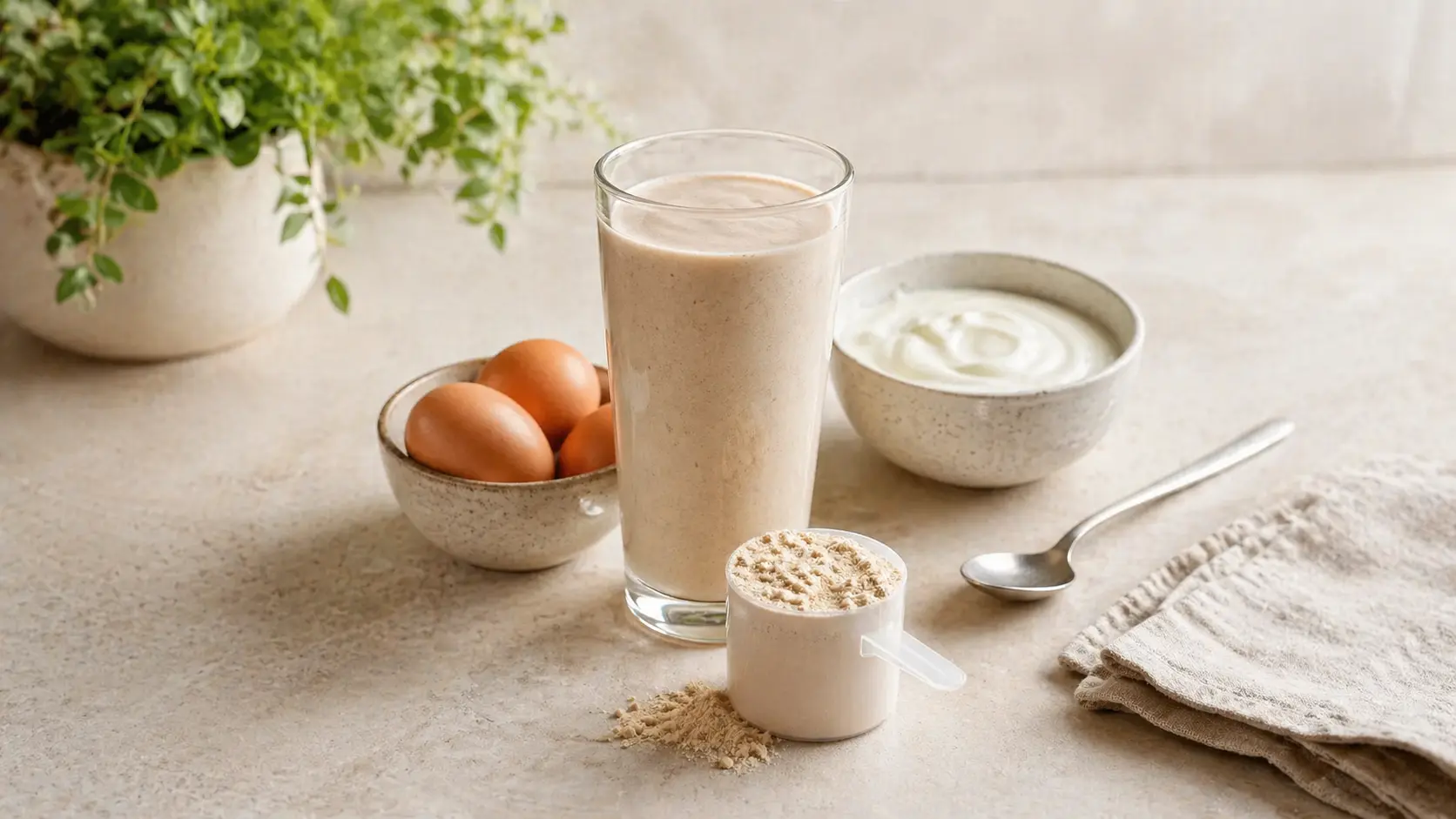
Best use case: Add one scoop of whey, casein, or a well-formulated plant protein to breakfast.
Practical options:
- Greek yogurt mixed with protein powder
- A protein shake with oats or fruit
- A smoothie with protein powder, berries, and milk
- Protein coffee, if it agrees with your stomach
Many men start the day with coffee alone, but caffeine works better when it supports a real meal instead of replacing one. Fitsnip’s guide to whether coffee is good for you explains how dose, timing, sensitivity, context, and preparation change the health picture.
This can stay simple. You are fixing the weakest meal in the day.
Coaching check: If your breakfast usually has less than 20 grams of protein, protein powder may be useful.
For a food-first approach to fat loss, Fitsnip’s guide to foods that help with weight loss explains how protein, fiber, food volume, and consistency make meals more filling.
2. The Man Who Already Hits His Protein From Food
This man probably does not need protein powder.
If you eat protein-rich meals across the day, powder may add cost, calories, sweeteners, and digestive friction without solving a real problem.
Whole foods also bring nutrients that protein powder does not provide in the same way. Eggs, dairy, fish, lean meats, beans, lentils, tofu, and Greek yogurt all bring protein inside a larger food matrix. USDA FoodData Central is the best baseline database for checking whole-food protein values because serving size, preparation method, and brand can change the numbers.
Best use case: Skip powder unless convenience is the problem.
You may be covered through food if:
- You eat meaningful protein at breakfast, lunch, and dinner.
- Your training recovery is solid.
- Your body composition is moving in the right direction.
- Your appetite and calories are under control.
- You enjoy your normal protein foods.
Fitsnip’s Balanced Plate Guide can help you build a more complete protein, carb, fat, and produce structure around your goals.
Protein powder can help fill gaps, but your daily meals still matter most.
Coaching check: Track protein for three normal days before buying another tub.
3. The Man Trying to Lose Fat While Preserving Muscle
This is another strong case for protein powder, when used correctly.
Fat loss changes the problem. Calories come down. Hunger goes up. Meals get smaller. If you are lifting while dieting, the goal is losing fat while keeping as much lean mass as possible.
NIH ODS notes that athletes may benefit from greater protein amounts during short periods of intense training or when reducing energy intake to improve physique or reach a competition weight.
A shake can help because it gives you a repeatable high-protein option without many calories.
Best use case: Use protein powder as a controlled protein anchor.
Practical options:
- A shake after training when dinner is still hours away
- A scoop mixed into Greek yogurt instead of a high-calorie dessert
- A simple shake during a busy workday to reduce evening overeating
The shake helps with fat loss only when it supports calorie balance. It works best when it makes your protein target and calorie target easier to repeat.
Coaching check: If protein powder adds calories instead of replacing weaker calories, it may work against your fat-loss goal.
4. The Man Who Buys Protein Powder but Does Not Train Consistently
This is the trap.
Protein powder cannot replace training. It cannot create mechanical tension. It cannot compensate for poor sleep, random workouts, low daily movement, alcohol-heavy weekends, or a cycle of starting and stopping.
NIH ODS frames adequate protein as part of a broader nutrition and training foundation for athletic performance and recovery. The same source emphasizes that supplements work as additions to a solid diet and training base, with results varying by training level and exercise demands.
If you buy powder but lift once every two weeks, the first move is a repeatable training rhythm.
A better starting standard:
- Lift 2 to 4 days per week.
- Hit a realistic daily protein range from food first.
- Sleep enough to recover.
- Use protein powder only when it helps close a real gap.
Plenty of men have a supplement habit before they have a training habit. That order needs to be reversed.
Coaching check: If your tub is more consistent than your training log, fix the training log first.
Why Protein Matters More After 40
Men over 40 are not fragile. The body simply becomes less forgiving of skipped workouts, low-protein weeks, inconsistent sleep, and long gaps between hard training blocks.
One reason is anabolic resistance.
Anabolic resistance means aging muscle may have a reduced muscle protein synthesis response to nutrition or exercise compared with younger muscle. A 2026 systematic review and meta-analysis in Frontiers in Physiology found modest but significant reductions in post-absorptive and postprandial muscle protein synthesis with aging. The same review reported that many post-exercise and combined post-meal plus exercise studies showed no significant age-related difference, suggesting older muscle can still respond when the stimulus is strong enough.
The exercise piece is the part worth focusing on.
Anabolic resistance deserves attention without panic. The answer is a clearer signal: consistent training, adequate protein, recovery, and time.
That signal is built from:
- Resistance training
- Enough total daily protein
- Protein quality
- Protein distribution
- Sleep
- Recovery
- Calorie balance
- Consistency over months
Most of those inputs are in your control. Protein powder is the smallest lever on the list.
How Much Protein Do Men Over 40 Need?
Protein needs should be presented as a range because body size, training status, calorie intake, health history, and goals all matter.
For healthy men who train, a practical evidence-based range is often around 1.2 to 2.0 grams of protein per kilogram of body weight per day.
The lower end may fit lighter training, general activity, or maintenance. The higher end may fit consistent resistance training, harder training blocks, or fat-loss phases where preserving lean mass is a priority.
NIH ODS lists athlete protein needs around 1.2 to 2.0 g/kg/day. ISSN places most exercising individuals around 1.4 to 2.0 g/kg/day for building or maintaining muscle mass.
These are rough calculations based on population research ranges, not individualized recommendations.
For a 180-pound man:
- 180 lb is about 82 kg.
- 1.2 g/kg is about 98 grams per day.
- 1.6 g/kg is about 131 grams per day.
- 2.0 g/kg is about 164 grams per day.
Most men do not need to land at the top of that range every day. Hitting the middle consistently will usually outperform hitting the top occasionally.
A man lifting three hard days per week while losing fat may need more than a man walking daily and eating at maintenance. A man with chronic kidney disease, low appetite, digestive issues, or medical restrictions needs individualized guidance.
Should You Take Protein Powder? Five Questions to Answer First
Use this before buying protein powder.
1. Do you actually know your current protein intake, or are you estimating?
Track three normal days first. Most people are worse at estimating protein than they think.
2. Are you lifting at least twice per week?
Build the training rhythm first. Protein powder makes more sense when the body has a reason to use the extra protein.
3. Is one meal consistently low in protein?
If breakfast or lunch is weak most days, powder may help.
4. Are you dieting and trying to preserve muscle?
If yes, protein powder may be useful because it is convenient, measurable, and usually lower in calories than many snack foods.
5. Do whole foods already get you there comfortably?
If yes, powder is optional.
Bottom line: Buy protein powder when it solves a real consistency problem.
Whey, Casein, or Plant Protein After 40?
Most men should choose based on digestion, preference, budget, protein quality, and dietary restrictions.
Whey Protein
Whey is fast-digesting, rich in essential amino acids, and usually high in leucine. NIH ODS notes that protein powders often contain whey, a complete protein isolated from milk, and that whey has more leucine than casein or soy.
That makes whey a practical default for many men who lift and tolerate dairy well.
Casein Protein
Casein also comes from milk, but it digests more slowly than whey. NIH ODS notes that casein releases amino acids into the blood more slowly than whey.
Some men prefer casein at night or when they want something more filling.
Plant Protein
Plant protein can work, especially soy, pea, rice blends, or mixed plant formulas. Soy is one of the few plant proteins commonly treated as complete because it provides all essential amino acids in useful amounts.
The main issue is protein quality and amino acid completeness. NIH ODS notes that some plant proteins may be lower in specific essential amino acids and that complementary protein sources may be needed.
For men over 40, leucine matters because leucine helps stimulate muscle protein synthesis. A separate leucine supplement is usually unnecessary when the overall protein serving is strong enough, especially from complete proteins.
Dairy tolerance also matters. Some men digest whey isolate better than whey concentrate because it usually contains less lactose. Others do better with plant protein. A protein powder that bloats you, upsets your stomach, or makes you avoid using it is the wrong product for you.
Choose the protein you can digest, afford, and use consistently without turning it into a dessert habit.
How to Choose a Protein Powder Without Falling for Marketing
The protein powder market often rewards attention-grabbing claims more than careful formulation. Many products lead with bold flavors, celebrity endorsements, muscle-gain promises, or testosterone-adjacent branding while burying a mediocre formula underneath.
The label check below cuts through that.
Look for:
- Around 20 to 30 grams of protein per serving
- A clear protein source
- A short ingredient list
- Low added sugar
- No unnecessary stimulant blend
- No testosterone-style claims
- Third-party testing
This matters because dietary supplements are regulated differently from medications. NIH ODS states that exercise and athletic performance supplements do not require FDA premarket review or approval, and that supplement manufacturers are responsible for product safety and truthful labeling before marketing.
For protein powder, two of the most useful third-party testing marks are:
- NSF Certified for Sport
- Informed Sport
NIH ODS identifies NSF Certified for Sport and Informed-Choice as major third-party certification services that can provide extra independent assurance about labeled ingredients and the absence of many banned substances and drugs.
NSF says its Certified for Sport program helps athletes, dietitians, coaches, and consumers make safer decisions when choosing sports supplements, and that the certification is recognized by organizations including USADA, MLB, NHL, and CFL.
Third-party testing gives extra assurance rather than perfection. It is a better trust filter than flavor claims and front-label marketing.
Informed Sport says its testing and supplement verification program helps reduce the risk of impurities and banned substances entering dietary supplements.
Whole Food Protein Still Matters
Protein powder can help, but whole foods should still form the base.
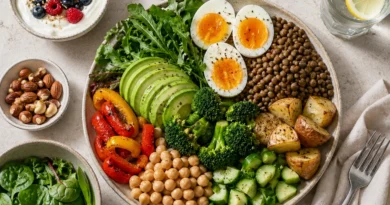
Whole foods bring broader nutrition. Greek yogurt brings protein plus dairy nutrients. Eggs bring protein plus choline and fat-soluble nutrients. Fish brings protein plus omega-3 fats depending on the type. Beans and lentils bring protein plus fiber and carbohydrates.
USDA FoodData Central is the best reference point for exact food comparisons because protein values change by serving size, preparation, and food type.
A practical coaching comparison:
- A scoop of protein powder often gives about 20 to 30 grams of protein.
- Greek yogurt can anchor a high-protein breakfast.
- Two eggs give you about 12 grams of protein, which makes them a useful supporting player but usually not enough to anchor a high-protein meal on their own.
- Chicken, lean beef, fish, tofu, cottage cheese, lentils, and Greek yogurt can all be part of the base.
The goal is building a protein pattern you can repeat.
Protein powder can help fill gaps, but your daily meals still matter most. Fitsnip’s Balanced Plate Guide can help you build a more complete protein, carb, fat, and produce structure around your goals.
Common Mistakes Men Make With Protein Powder After 40
Mistake 1: Using Powder Instead of Training
Protein supports the training response, while the program creates the stimulus. Fix the program before adding supplements.
Mistake 2: Taking Protein but Ignoring Sleep
Muscle is repaired between sessions. Poor sleep weakens recovery, appetite regulation, training performance, and consistency.
Mistake 3: Drinking Calories Without Tracking Them
A scoop of protein powder is manageable. A shake with peanut butter, whole milk, honey, banana, oats, and extra toppings can become a full meal.
That may help a man trying to gain weight. It can hurt a man trying to lose fat.
If you add protein powder to an already complete meal, you may have created a second meal without realizing it.
Mistake 4: Assuming More Protein Always Means More Muscle
More protein only helps when the body has a reason to use it.
A man eating 250 grams of protein per day while skipping the gym and sleeping five hours a night is mostly creating expensive nitrogen waste, not a better training outcome.
Mistake 5: Ignoring Kidney Disease
This caveat matters.
Men with chronic kidney disease should not casually increase protein powder or total protein. The National Kidney Foundation states that people with CKD who are not on dialysis may need to limit protein, while people on dialysis often need more protein because dialysis removes protein waste from the blood. The exact amount depends on body size, nutrition status, and kidney problem.
If you have CKD, reduced kidney function, a history of kidney disease, or medical instructions to limit protein, ask a clinician or renal dietitian before using protein powder.
So, Do Men Over 40 Need Protein Powder?
Some men over 40 benefit from protein powder. Others are better off spending their money on better food, better sleep, or a more consistent training plan.
Protein powder after 40 is useful when it helps you:
- Fix a low-protein breakfast
- Hit your daily protein range during fat loss
- Recover from consistent lifting
- Add convenience without many calories
- Stay consistent when whole-food meals are not realistic
It is less useful when:
- You already hit your protein target from food
- You are not training consistently
- It adds calories you do not need
- You use it as a health halo
- You have a medical reason to limit protein
After 40, the useful test is practical: are you underfeeding the body you expect to perform, and would a shake be the simplest way to fix that?
Trust-First Product Note
Fitsnip may review protein powders in separate guides, but this article is not a push to buy one.
If you choose a protein powder, prioritize third-party testing, simple ingredients, adequate protein per serving, and a formula that fits your digestion and goals.
For a product-focused follow-up, see Fitsnip’s Best Protein Powders for Muscle Growth.
FAQ
Do men over 40 need protein powder to build muscle?
Usually, no. Men over 40 need resistance training, enough total protein, recovery, and consistency. Protein powder can help if food intake falls short.
Is protein powder after 40 safe?
For many healthy adults, moderate protein powder use can fit into a balanced diet. Men with chronic kidney disease, reduced kidney function, or medical instructions to limit protein should ask a qualified clinician before increasing protein intake.
Is whey protein better than plant protein after 40?
Whey is rich in essential amino acids and leucine, which makes it practical for muscle protein synthesis. For most men, whey is the easier default. For men who avoid dairy, a complete plant protein blend or soy can get the job done.
How much protein should a man over 40 eat?
It depends on body size, training, calorie intake, and health status. For healthy men who train, a common evidence-based range is around 1.2 to 2.0 grams per kilogram of body weight per day.
Should I take protein powder on rest days?
Only if it helps you hit your daily protein target. Recovery continues between sessions, so a rest-day shake can make sense if your meals are low in protein.
What is the best time to take protein powder?
Exact timing matters less than total daily intake, but spreading protein across meals can help men who load most of their protein into dinner. After training or with a low-protein breakfast are the most practical windows.
Is protein powder worth the cost for men over 40?
It is worth it if it solves a real consistency problem. If your training is inconsistent and your food protein is already adequate, you are buying a solution to a problem you do not have.
Sources
- International Society of Sports Nutrition position stand on protein and exercise
- NIH Office of Dietary Supplements: Exercise and Athletic Performance
- Frontiers in Physiology: Age-related changes in anabolic resistance
- Mamerow et al.: Dietary protein distribution and 24-hour muscle protein synthesis
- National Kidney Foundation: CKD diet and protein guidance
- NSF Certified for Sport
- Informed Sport
- USDA FoodData Central

J.D. Wilson, PN1, is the founder of Fitsnip.com, a Precision Nutrition Level 1 Coach, certified meditation teacher, and author of The Comfort Trap: The Quiet Cost of an Unchallenged Life. His work focuses on practical, evidence-based nutrition, strength training, behavior change, sleep, stress, recovery, and everyday health decisions for adults who want clear guidance without hype. About J.D. Wilson